
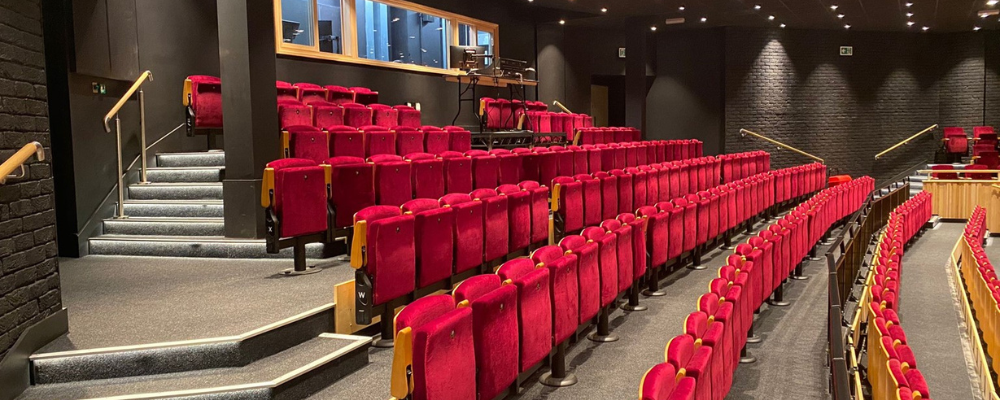
When thinking about fixed seating, It’s easy to focus on the chair itself; the design, its upholstery, its comfort. But the layout itself is equally important. A poorly planned fixed seating layout can reduce capacity by 10 to 20% compared to well-optimised one, create obstructed sightlines for a large proportion of the audience, and generate pinch points that compromise evacuation safety compliance.
UK building regulations set clear requirements for how seating rows and aisle widths must be configured to support safe evacuation, and these must be factored into venue design from the earliest stage (Building Regulations Approved Document B). Getting the layout right at the specification stage is much less costly in the long-run rather than correcting post-installation.
The Main Fixed Seating Layout Types
Continental Layout
The continental layout is characterised by long, uninterrupted rows with no central aisle. Instead, wider aisles and generous access along rows of seating (typically 400 to 430mm) allow audience members to move in and out without disrupting their neighbours. This approach maximises the number of seats per row and overall capacity, making it popular for fixed auditorium seating installations.
BS EN 13200 sets minimum access along rows of seating at 300mm clear passage, but most contemporary continental layouts provide considerably more. When planned carefully, continental layouts consistently deliver higher seat counts per square metre than traditional formats.
Traditional Layout with Central Aisle
The traditional layout divides the seating area into two blocks separated by a central aisle, with additional side aisles depending on the width of the space. This format is familiar, straightforward for audiences to navigate, and well-suited to smaller venues or spaces where accessibility for wheelchair users needs to be integrated into the aisle plan.
The central aisle does reduce overall seat count compared to continental seating, but it also reduces the maximum number of seats per row, an important consideration under UK fire regulations, which specify maximum row lengths before additional aisles are required (Building Regulations, Approved Document B, 2019).
Raked and Stepped Configurations
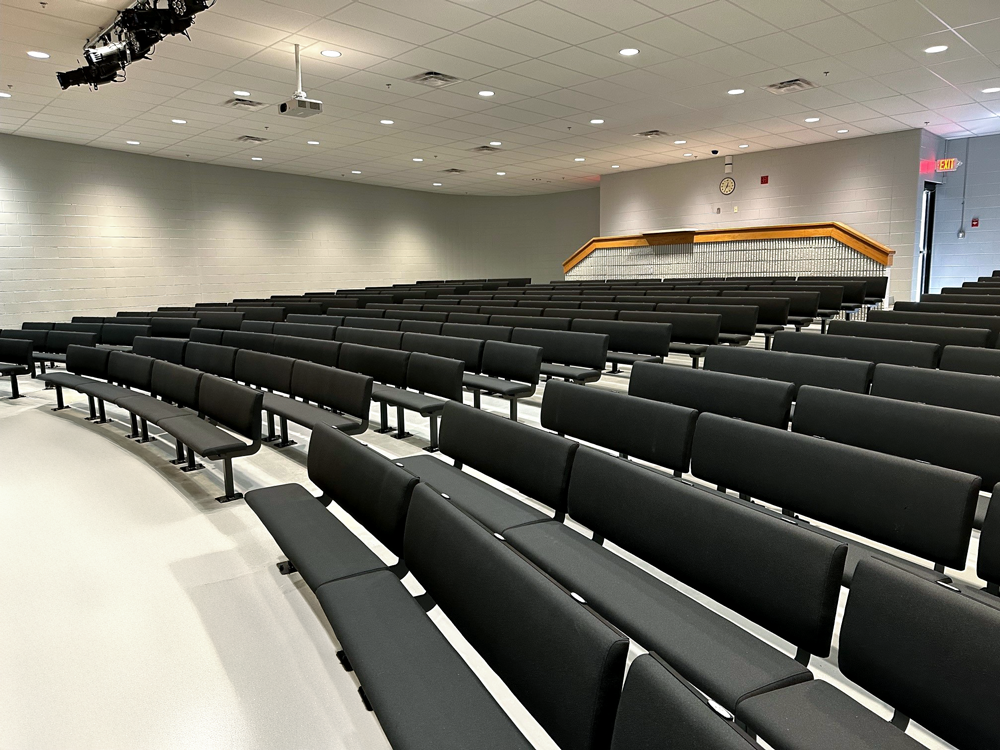
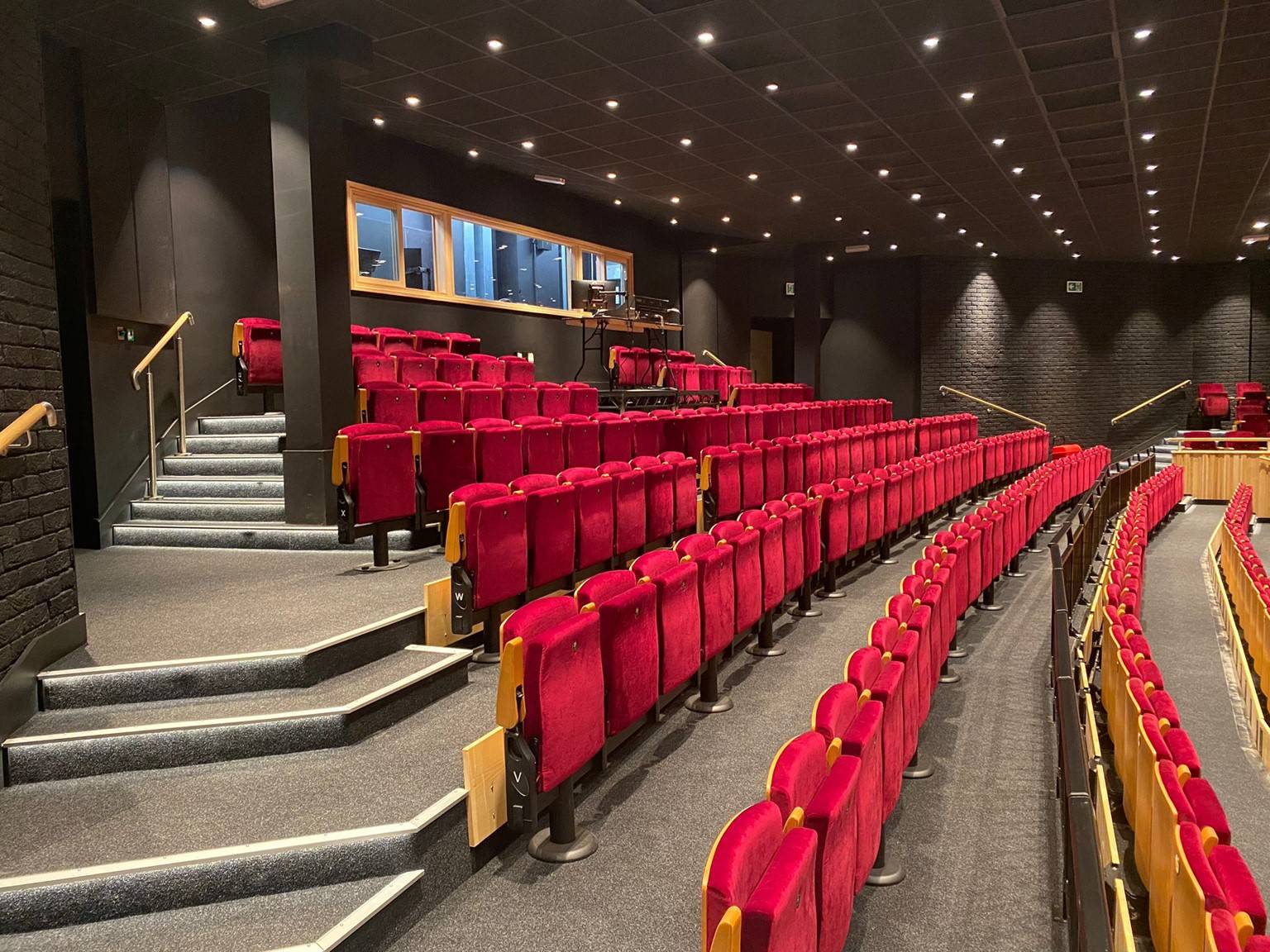
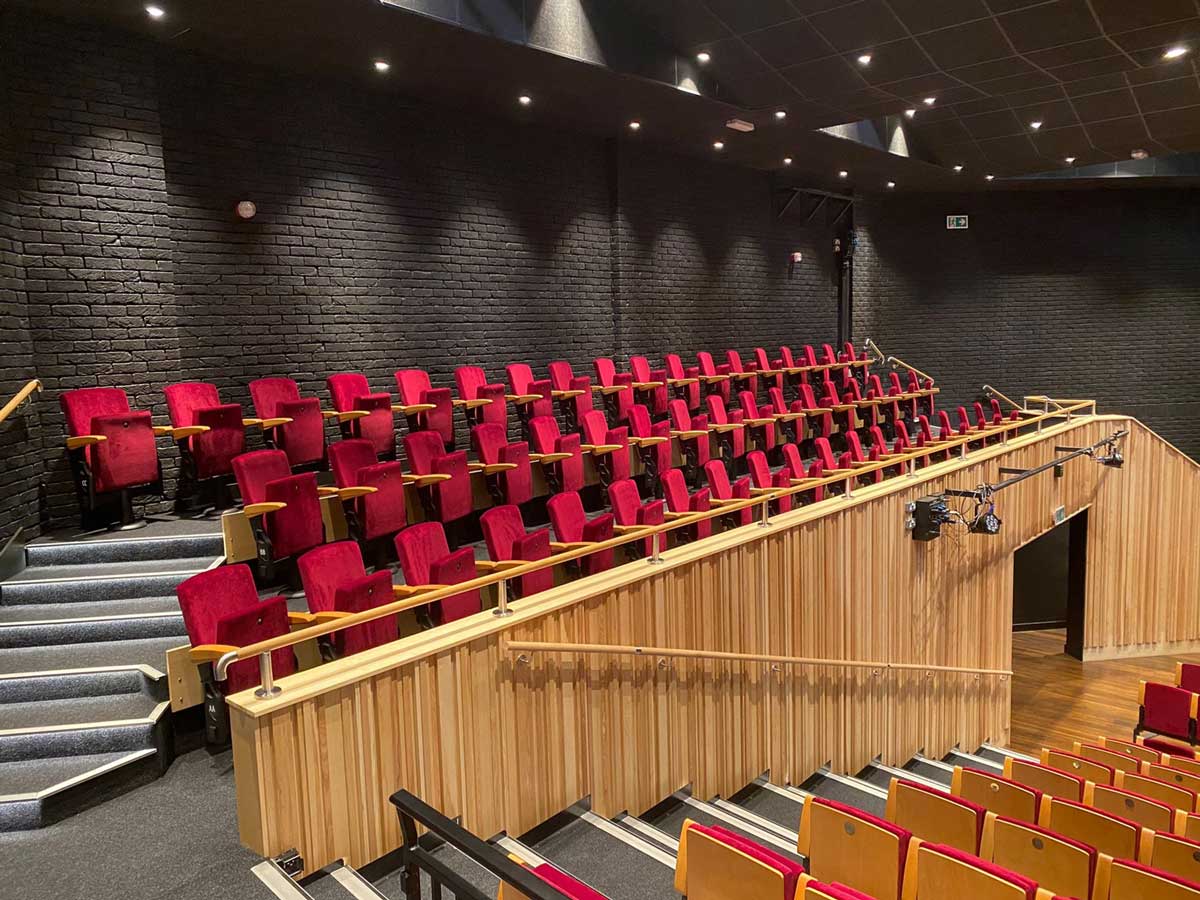
Raking, the gradual incline of the floor from front to back, is essential in any fixed seating layout where sightlines matter. A correctly calculated rake ensures that each row of seats rises sufficiently above the one in front so that every audience member has a clear view of the stage, screen, or podium. Without adequate rake, even a well-spaced layout will produce obstructed views in the rear sections.
The standard calculation for rake is based on the 'C-value' — the vertical distance between the eye of a seated person in one row and the sightline to the focal point over the head of the person in the row in front.
A C-value of 60 to 80mm is generally considered comfortable for most audience types (ABTT, Theatre Buildings: A Design Guide, 2010 ). Raked fixed lecture hall seating in universities and colleges is typically calculated to a higher standard to accommodate note-taking and screen visibility simultaneously.
Fan-Shaped and Curved Layouts
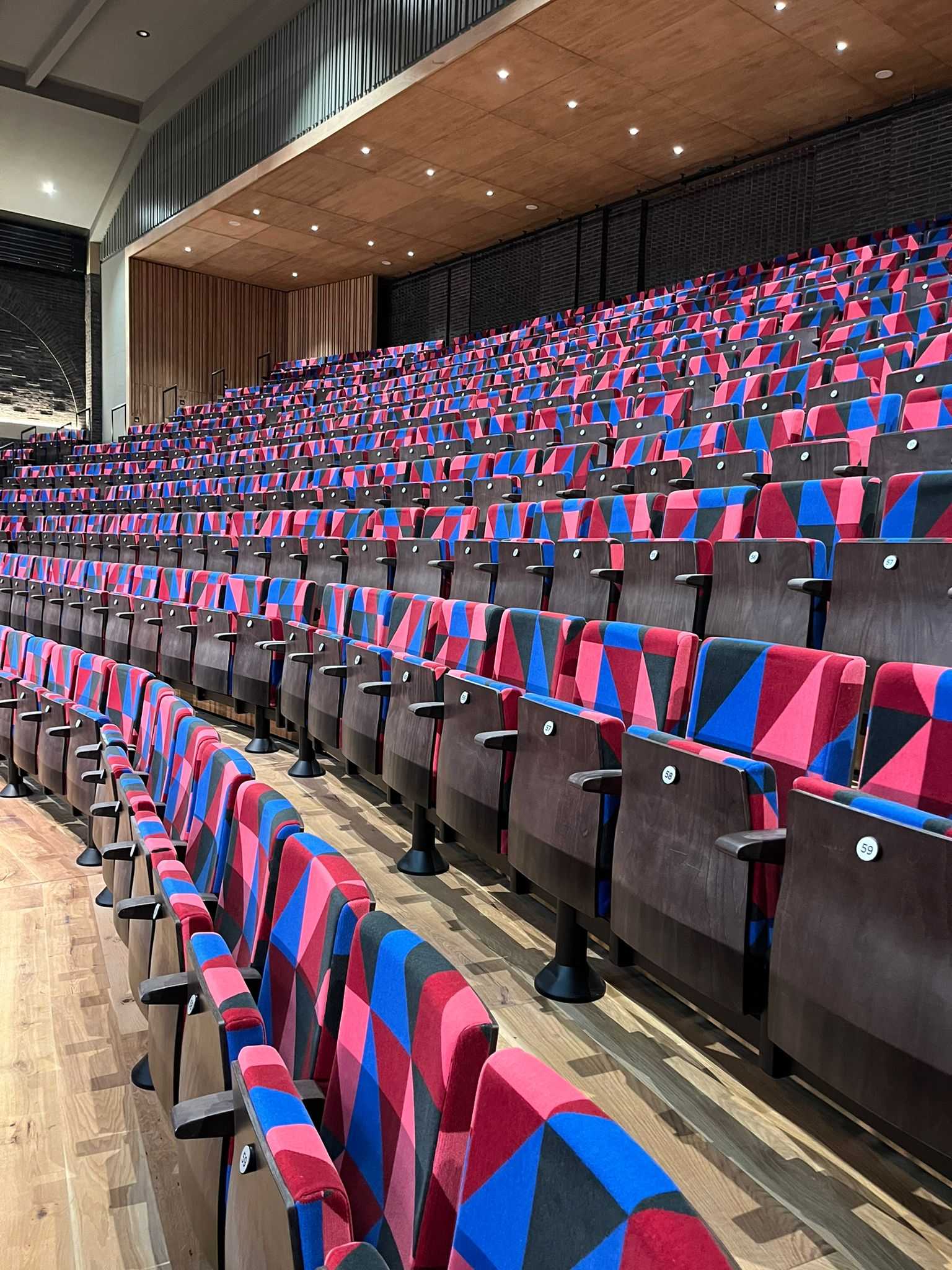
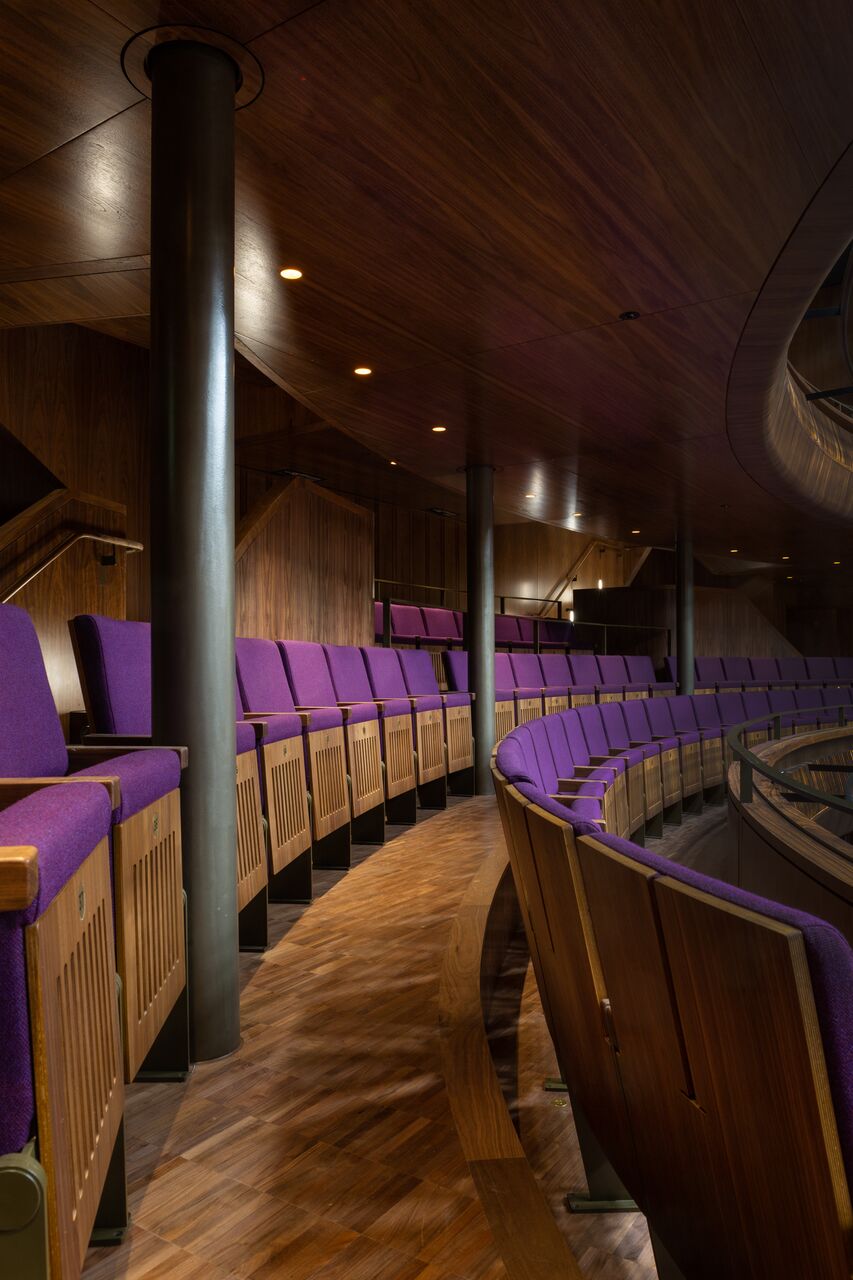
For larger venues, particularly performing arts spaces and concert halls, fan-shaped or curved fixed seating layouts reduce the average distance from the stage to the audience while maintaining acceptable sightlines across the full width of the space.
Curved rows require bespoke setting-out and precise installation, but they can substantially increase both capacity and the quality of experience for audience members in side sections.
Hussey Seatway has experience designing and installing seating for venues with complex curved layouts and works with architects and acoustic consultants to ensure the seating plan integrates seamlessly with the wider design.
See how we worked curved seating for on the Linbury Theatre at the Royal Opera House for a sense of the complexity we deliver at the highest level.

Key Factors That Shape Fixed Seating Layout Decisions
Capacity vs. Comfort
There is always a tension between maximising seat count and maintaining audience comfort. Row depths that are too shallow increase capacity on paper but result in poor egress and a cramped experience.
Industry guidance and seating standards consistently point to a minimum row depth of 800mm (front of seat to front of next seat) for general audience seating, rising to 900 to 1,000mm for premium configurations. This aligns with specifications used across UK theatre and educational venue projects. Specifying fixed seating within these parameters ensures the space performs to its potential in use, not just on the layout plan.
Accessibility and Inclusion
Building Regulations Approved Document M requires that wheelchair spaces are distributed throughout the seating area rather than clustered in one location. In a fixed seating layout, these spaces must be planned at the outset, not retrofitted. Companion seating must be provided immediately adjacent.
The regulations specify that wheelchair spaces should be provided at a minimum ratio of 1 in 100 for the first 200 seats, with additional spaces as the total seat count rises (HM Government, Approved Document M, 2015).
A well-executed fixed seating layout integrates these requirements seamlessly, ensuring that disabled audience members have equivalent access to the full range of positions, not just a designated corner. Hussey Seatway works to ensure every installation meets or exceeds current accessibility requirements as standard.
Emergency Egress
All fixed auditorium seating layouts must be designed in accordance with Building Regulations Approved Document B, which sets out requirements for means of escape.
Key parameters include maximum travel distances to exits, minimum clear aisle widths (typically 1,050 to 1,200mm for main aisles in public venues), and maximum row lengths before an additional cross-aisle is required.
According to the Event Safety Alliance, the majority of evacuation incidents in public venues involve crowd bottlenecks at poorly planned aisle junctions, a risk that good layout design eliminates from the outset (Event Safety Alliance, 2020).
Acoustic Integration
Fixed seating layouts interact directly with the acoustic performance of the space. The absorption coefficient of upholstered seating affects reverberation times, and the angle of raked rows influences early reflection patterns.
For performance venues and lecture theatres, the seating layout should be planned in consultation with an acoustic engineer from early design stages. Hussey Seatway regularly collaborates with acoustic consultants to ensure fixed seating layouts support, rather than undermine, the acoustic brief.
Frequently Asked Questions
How do I work out how many seats will fit in my venue?
A fixed seating layout calculation starts with the as-built floor area and height, the required row depth and aisle widths, and the rake specification for the floor. From these parameters, a specialist like Hussey Seatway can produce a CAD layout that confirms the seat count accurately before any products are ordered. Rough rule-of-thumb estimates based on floor area alone are rarely reliable for tiered seating installations.
What is the minimum row depth for fixed auditorium seating?
Industry guidance recommends a minimum of 800mm row depth (front of seat to front of the next row) for general audience seating, with 900 to 1,000mm for premium or comfort-focused installations. Continental layouts with no central aisle require greater row depths to satisfy egress requirements, typically 400mm or more of clear passage between rows.
How do fixed seating layouts accommodate wheelchair users?
Wheelchair spaces must be integrated into the layout at the planning stage, not retrofitted. Building Regulations Approved Document M requires a minimum ratio of wheelchair spaces and specifies that these are distributed throughout the seating area with companion seating alongside. Hussey Seatway designs all fixed seating installations to meet or exceed these requirements as standard.
Can a fixed seating layout be altered after installation?
Fixed seating is by definition a permanent installation. While individual seats can be replaced or upholstery refurbished, the structural layout; row spacing, rake, aisle positions etc, is not easily changed post-installation. This makes it critical to get the layout right at the specification stage. Hussey Seatway's design service is intended to eliminate this risk.
Whether you’re designing a new auditorium from scratch or looking to rethink the seating layout in an existing space, our team is ready to help. We offer a full design consultation service and can work alongside your architect, acoustic consultant, or facilities team at any stage of the project.
Explore our fixed seating range of get in touch to discuss your project in more detail.